Introduction
In high-power applications such as new energy and power systems, the stability of high-current transmission directly affects equipment operation and safety. Traditional high-current products are often bulky and cumbersome to connect, making it difficult to meet the demands of high-density layouts and high-load transmission. Building on the existingTBR10/20/30/60/80/100/150 seriesof high-current feed-through terminal blocks, SUPU has now launched theTBR200/300/500 series. Centered on high-specification current carrying capacity, the new models provide a safe and efficient transmission solution for high-voltage, high-current applications.
Key Features
01 High-Spec Current Capacity, Powerful Performance
The SUPU TBR200/300/500 series covers 200A, 300A and 500A current ratings, all supporting a 600V rated voltage and compatible with 100mm²–380mm² (4/0AWG–750kcmil) heavy-gauge conductors. It reliably carries power transmission for high-power equipment and meets high-load requirements.
02 Premium Materials, Solid and Durable
The main structure of the TBR series terminal block is made of copper alloy, and the insulation material reaches the V-0 flame-retardant rating. This effectively prevents potential hazards during high-current transmission, ensures long-term stable operation, and extends product service life.
03 Compact Design, Space Friendly
The optimized structural layout reduces volume while maintaining current capacity. With 36mm / 45mm / 60mm pitch options, the TBR200/300/500 series fits high-density equipment layouts and improves circuit integration.
04 Fast Connection, Efficient Installation
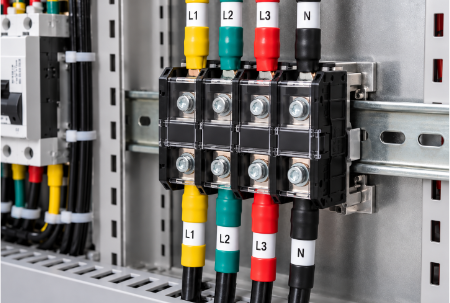
Bolt-connection wiring combined with a DIN rail mounting design makes assembly and disassembly easy, with no complex tools required — significantly shortening equipment assembly cycles and reducing maintenance costs.
05 Custom Service + Low Maintenance, Outstanding Value
Customization services are available to precisely match the specific needs of different applications. The stable product structure and low failure rate keep ongoing maintenance costs down, balancing practicality and economy.
Technical Data
| Model | Wiring method | Pitch (mm) | Poles | UL rated voltage / current | Strip length (mm) | Rated wiring capacity |
|---|---|---|---|---|---|---|
| TBR200-XXC-LR-0001 | Bolt connection | 36.0 | 1–16 | 600V / 200A | 14–18 | 20–4/0AWG |
| TBR300-XXC-LR-0001 | Bolt connection | 45.0 | 1–16 | 600V / 300A | 19–21 | 20–300kcmil |
| TBR500-XXC-LR-0001 | Bolt connection | 60.0 | 1–16 | 600V / 500A | 19–21 | 300–750kcmil |
With stable high-current transmission as its core strength, the SUPU TBR series of high-current feed-through terminal blocks solves the transmission pain points of high-power applications. It is a preferred solution for high-current connections, helping enterprises improve equipment operating safety and deployment efficiency.
Industry Applications
- Power industry
- Industrial automation
- Energy storage industry
Frequently Asked Questions
What current ratings and voltage do the SUPU TBR200/300/500 terminal blocks support?
The series covers 200A, 300A and 500A current ratings, all supporting a 600V rated voltage and compatible with 100mm²–380mm² (4/0AWG–750kcmil) heavy-gauge conductors.
What material is used in the SUPU TBR series high-current terminal blocks?
The main structure is made of copper alloy, and the insulation material reaches the V-0 flame-retardant rating.
What pitch options and pole counts are available for the TBR200/300/500 series?
The series offers 36mm / 45mm / 60mm pitch options and 1–16 poles, fitting high-density equipment layouts and improving circuit integration.
How are the SUPU TBR series terminal blocks wired and mounted?
Bolt-connection wiring combined with a DIN rail mounting design makes assembly and disassembly easy, with no complex tools required.
What are the model numbers of the TBR200/300/500 series?
TBR200-XXC-LR-0001, TBR300-XXC-LR-0001 and TBR500-XXC-LR-0001.
Which industries use the SUPU TBR series high-current terminal blocks?
Power industry, industrial automation and energy storage industry.